
Lego has unveiled the Smart Brick – Here’s everything you need to know
Is this interactive technology worth getting excited about? We’re not so sure.

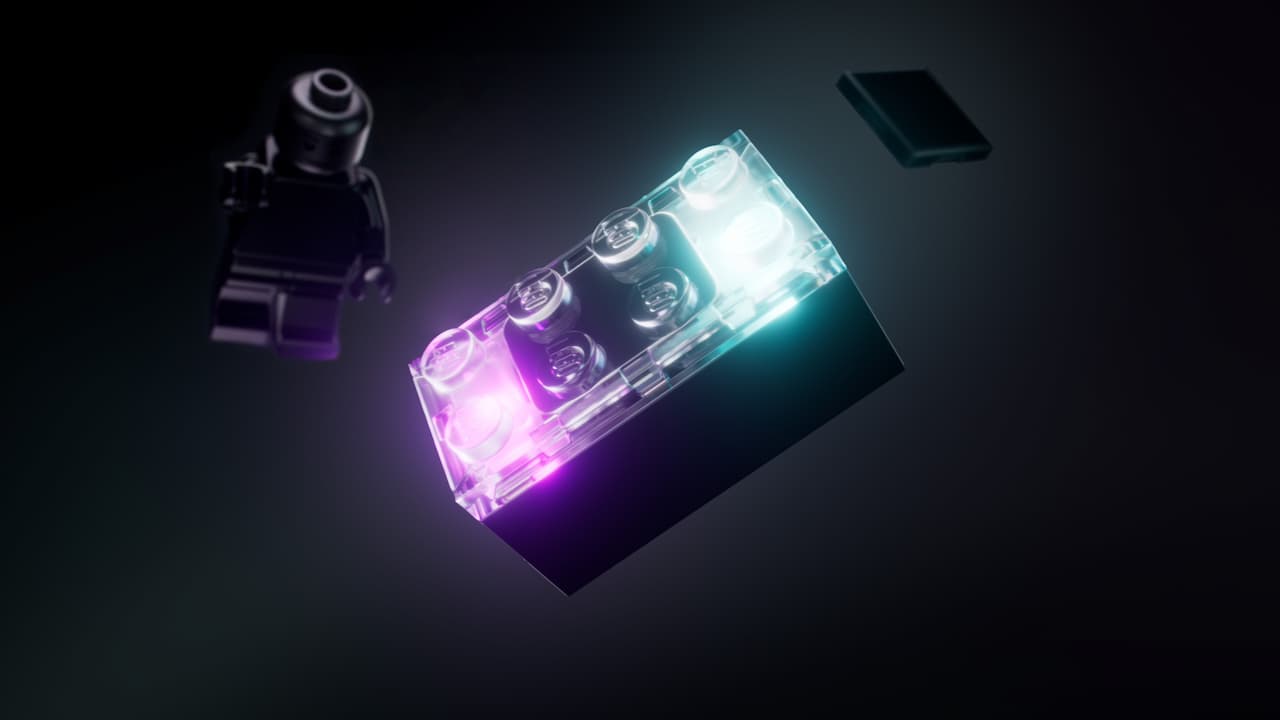
This week at CES 2026, Lego has unveiled its latest innovation: the Smart Brick. Bringing in a new way to play with Lego sets, the Smart Brick can interact with certain minifigures and bricks to respond in numerous ways. More specifically, it’ll make certain noises and/or light up depending what brick is in its vicinity.
What is the Lego Smart Brick, and how does it work?
The Smart Brick works similarly to the technology seen in the interactive Super Mario sets. In the same way that your Mario figure scans certain bricks to elicit a specific response, the Smart Brick can read certain Smart Tags, printed on minifigures or bricks, to respond appropriately. More than just letting out a certain sound, it’ll be able to pick up the location of Smart Tag, lighting up in its specific direction.
How will the Smart Brick be used in practice? Well, a vehicle could make a realistic vehicle sound, perhaps. Or a minifigure could speak, or make a sound that elicits a specific emotion or feeling – something that ties in with the storytelling that Lego often tries to capture in its sets.
More than just making sounds, the Smart Brick has a built-in accelerometer that knows when it’s being moved through the air (which could trigger a ‘whoosh’ sound, for example). Unlike a static sound brick, it can make multiple sounds depending what it’s interacting with. And unlike other recent Lego innovations, like its Hidden Side or Vidyo sets, it doesn’t require an app to connect with it. It’s all built into the bricks.
How does the Smart Brick differ from existing Lego tech?
As mentioned above, the Smart Brick most compares to the Lego Super Mario range of sets, which feature an interactive Mario (or Luigi or Peach) figure that can interact with certain bricks with barcodes on them. Similarly, the Smart Brick will interact with Smart Tags, special printed minifigures or bricks that will elicit some kind of response.
It means that one brick can provide multiple functions: give vehicles sound effects, minifigures voices and emotions, and, theoretically, a lot more. It could pick up on a vehicle moving quickly or grinding to a halt, and in the demonstration that Lego gave during CES, we saw it used to give minifigures voices as they fell from a great height, or as a vehicle crashed into them.
But… do we really need a Smart Brick?
The main criticism of the Smart Brick seems to be that it’s simply superfluous to children’s play. This is something very much geared towards kids’ sets, and collectors are unlikely to find much value in adding this technology to their builds. The idea is that children will enjoy the extra innovation their builds can provide when they become interactive, providing various sound effects and responses to certain actions.
But… those interactions are something that already come naturally with childplay, right? A kid will whoosh their spaceship through the air, making the sound effects themselves. They’ll move their minifigures how they want, giving voice to characters however they see fit, and now how a Smart Brick dictates they should sound. One might argue that it’s taking away a child’s freedom of creativity. It isn’t in the spirit of Lego, which has always promoted imagination and learning through fun.
The Smart Brick will also need charging regularly in order to be functional. Sets that come with a Smart Brick will (at least so far) all come with a special charger, but it means kids will frequently have to remove the brick from their model to charge it up if they wish to continue using its functions. Is it not likely that kids will simply forget to charge it, therefore reducing their Smart Play set to be a simple ‘old fashioned’ model?
Potential problems of the Smart Brick
The first issue of the Smart Brick is its price. The technology of the brick means it naturally incurs a higher price point, pushing up the cost of playsets, which have already crept up exponentially in recent years.
At least initially, all sets featuring a Smart Brick come with a dedicated charger. You can’t simply plug a USB-C into the brick; it needs to rest upon a podium, powered by USB-C to charge. This alone will carry a price, and if someone is to buy multiple sets they’re going to amass multiple charging devices. A bit like a brick separator, only much more expensive.
Perhaps in time, Lego will sell the chargers separately, but that means late adopters to the technology will need to make a second purchase just to be able to use the Smart Brick, and that seems unfair.
Smart Bricks will also have a limited shelf life, eventually no longer charging or working at all. It’s likely they’ll last for a year or more, and you might argue that in that time it’s likely a child will have stopped playing with a set, but it sort of defeats the object. In their current state, without technology beyond a light brick (which, admittedly, also eventually run out of power), Lego sets can never wear out. But if sets are designed specifically around a Smart Brick, they become rather useless if that brick no longer works.
It’s possible that replacement Smart Bricks will be available, but seemingly not straight away. It makes sense that eventually, Smart Bricks and Smart Tagged-pieces will be available separately, so you can incorporate them into existing models, but right now that isn’t an option.
When will the Smart Brick be available?
So far there are only three ‘Smart Play’ sets listed by Lego, and they will launch on 1st March 2026. It remains to be seen if more sets will be revealed between now and then, and it’s likely more sets will follow in the coming months.
What Lego Smart Brick sets have been announced so far?
Lego has revealed three ‘Smart Play’ sets, and they are all part of the Star Wars theme. They are:
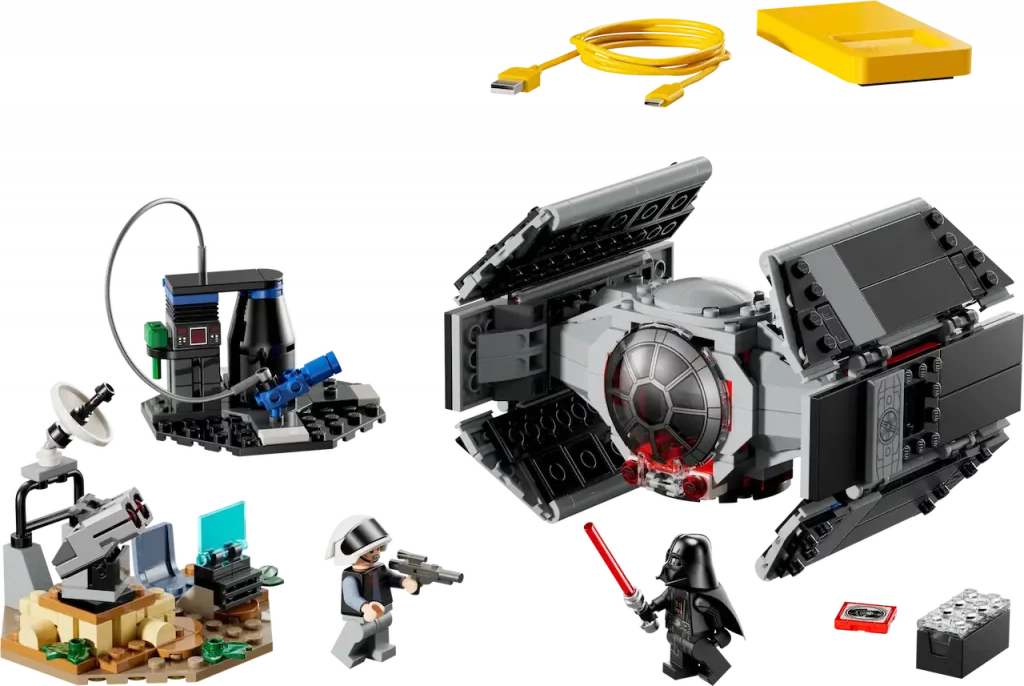
The cheapest of these sets is Darth Vader’s TIE Fighter, which will cost £59.99. It’s made up of 473 pieces and features a TIE Fighter, two minifigures, and two smaller scenery builds. The Smart Brick can interact with a Darth Vader minifigure and can react to movements of the TIE Fighter.
The most expensive of the three is the Throne Room Duel & A-Wing, which costs £139.99 for a 962-piece set. This set comes with two Smart Bricks, three Smart minifigures and five Smart-tagged bricks, which at least sounds like quite a lot. Two minifigures can duel with each other, with each Smart Brick offering sounds unique to both minifigs. Or place a Smart Brick on Palpatine’s throne and you can hear the Imperial March play.
The third set, Luke’s Red Five X-Wing, is made up of 581 pieces and costs £79.99. This one includes one Smart Brick, two Smart minifigures and five Smart tags. the Smart Brick can offer up sounds and lights for the X-Wing, provide turret blast sounds, realistic workshop sounds, and more.
Will the Smart Brick last?
This is the big question. Lego has a long history of creating new innovations and then simply not following through with them. Its Hidden Side theme and Vidyo theme both lasted a short time before being discontinued. It has also scrapped Power Functions, Dimensions didn’t last very long, and even Mindstorms is now firmly in the retired vault.
That’s not to say that the Smart Brick will go the same way. But Lego has form for stopping support of its more innovative, technical products quite quickly. Ultimately, it will depend on how well the Smart Brick sets do. Given their price points, it may well be a hard sell, but we’ll find out soon enough.
You can find out more about the Smart Brick and the Smart Play system on Lego’s website.
